
[📝] Today Was #83: Balance of awakening (Why) and coaching (How), redefining the routine system
✨ Summary of Gemini 2.5 Pro
A day to reflect on the failed routines that were focused on self-coaching, and pledge to achieve true growth through the integration of self-awakening (Why) and coaching (How).
🎯 Today’s Goal
If the achievement is not achieved, a fine of 2,000 won will be accumulated for each item regardless of the reason.
- Resume writing a blog diary
- Yinghyeokking - Love Your Soul digital single album release application (Muze Platform)
📌 Today’s Check-in
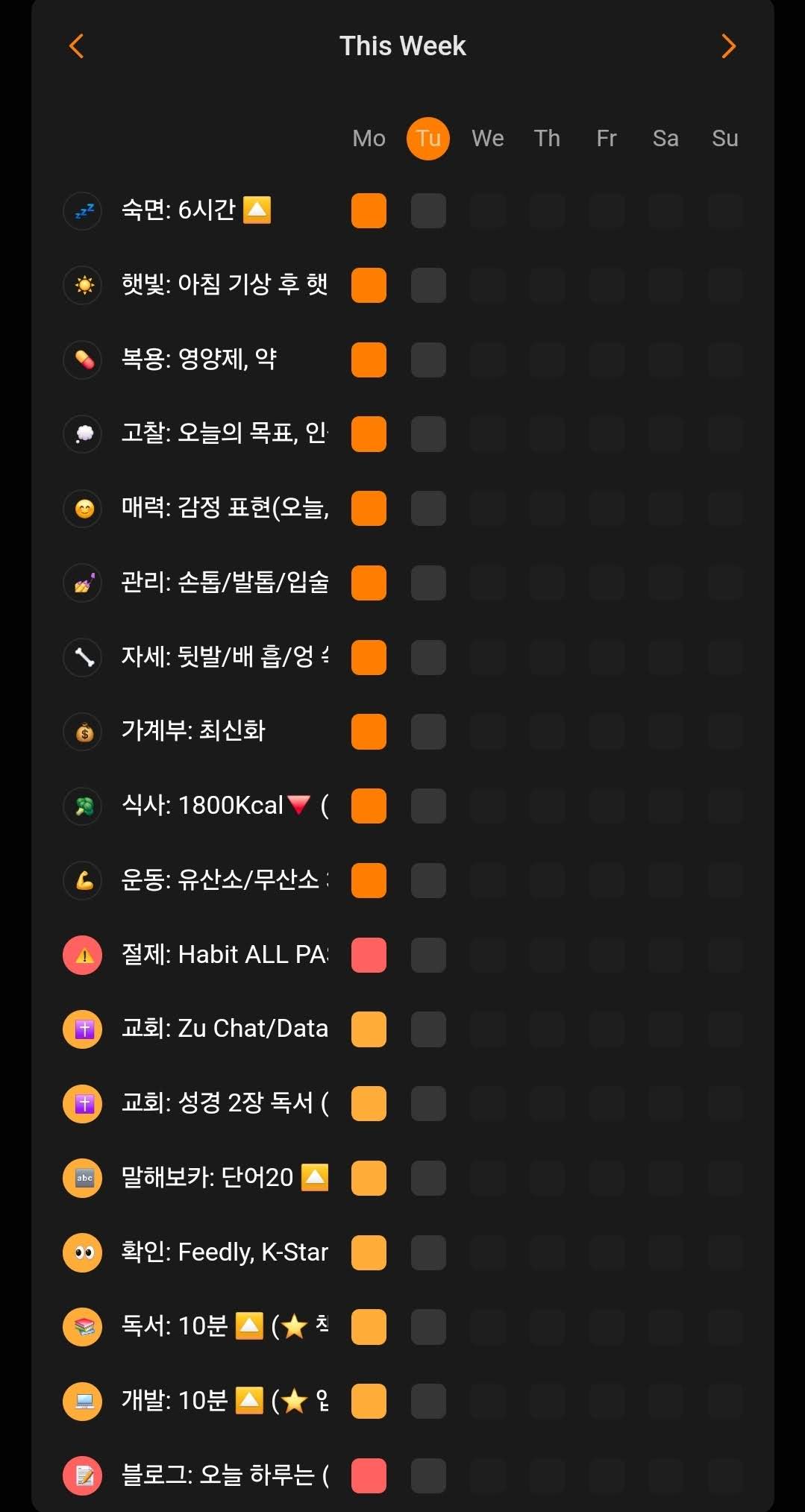
If the achievement is not achieved, a fine of 1,000 won will be accumulated for each item regardless of the reason.
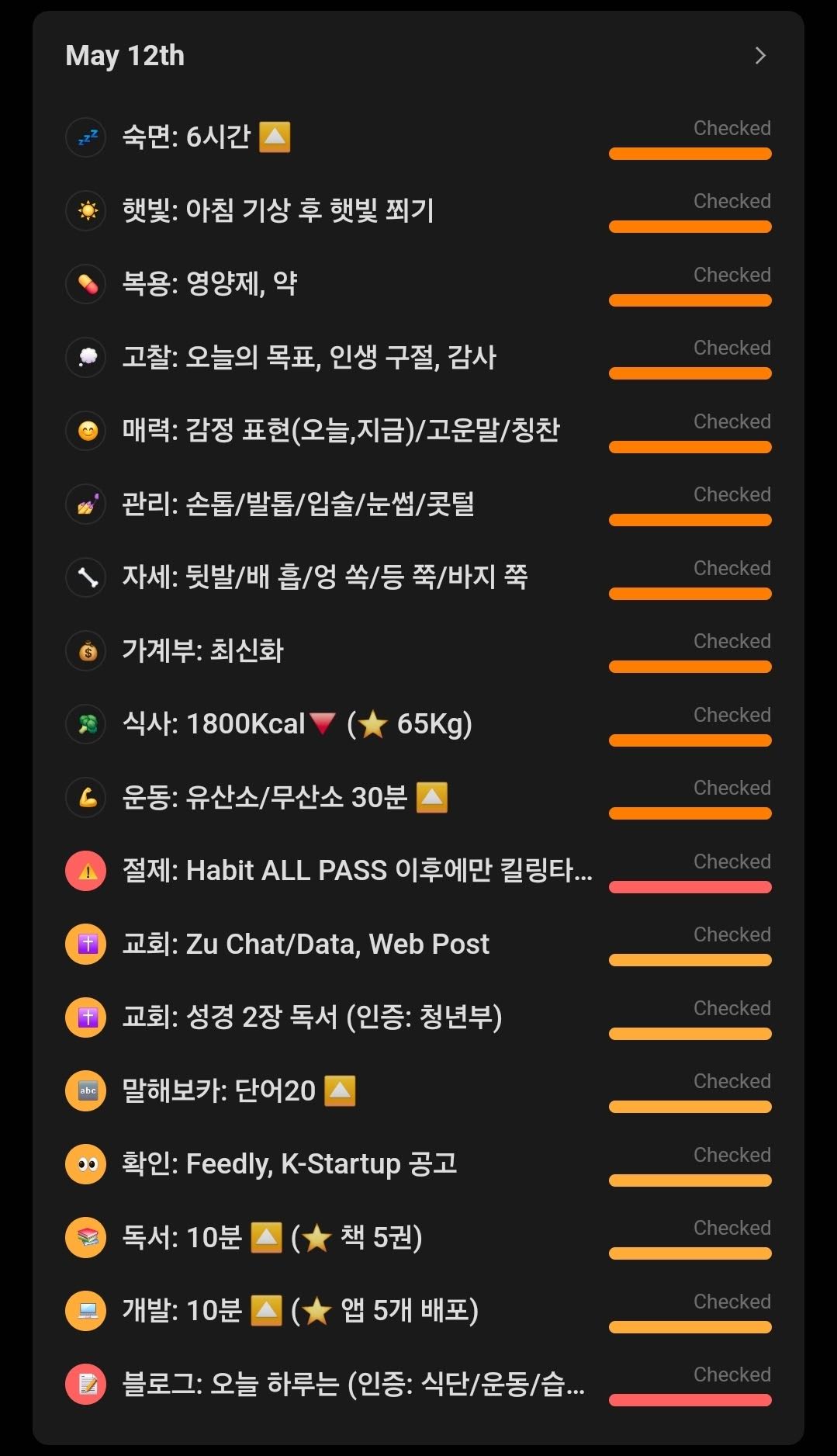
- Upload your diary to your blog
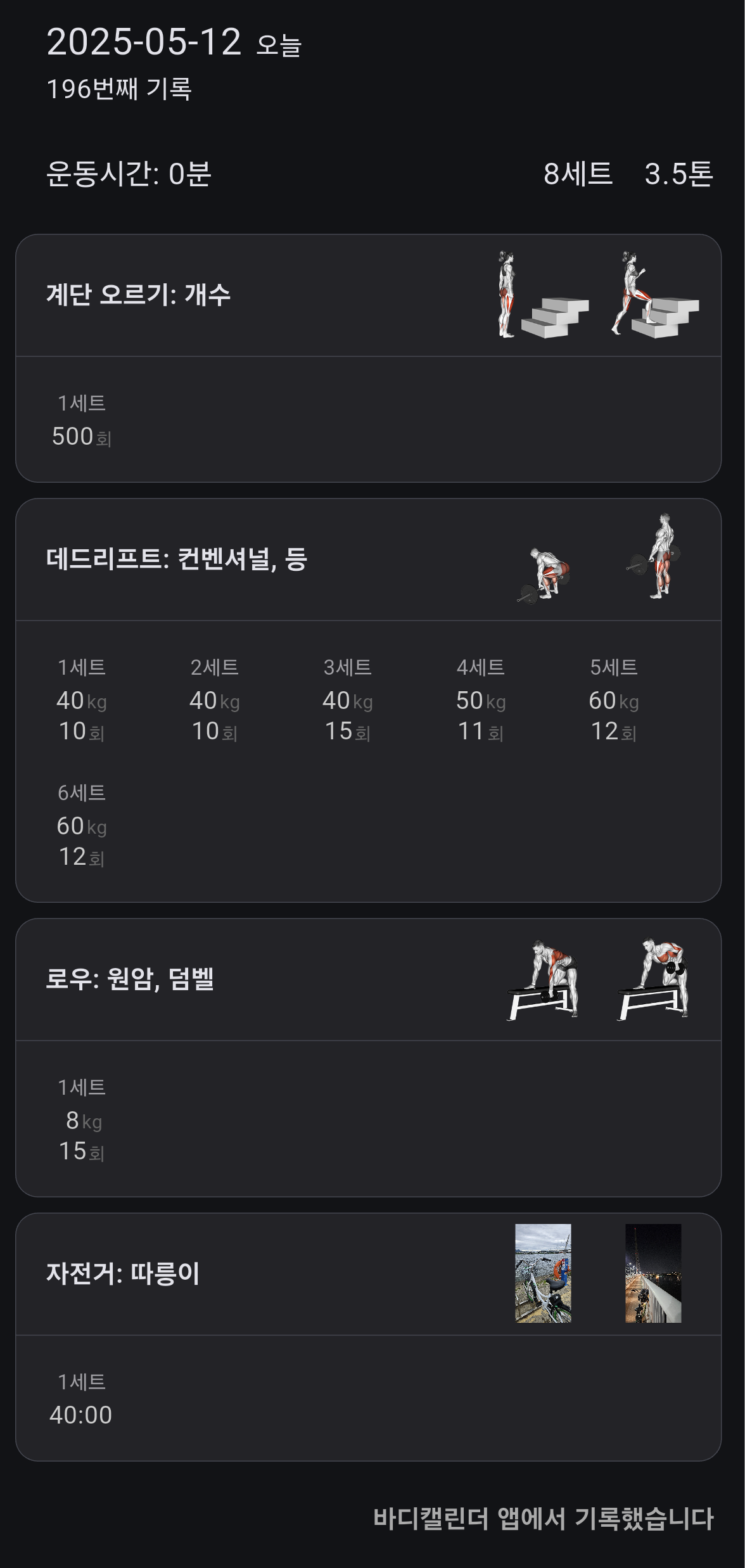
- Aerobic/anaerobic over 30 minutes
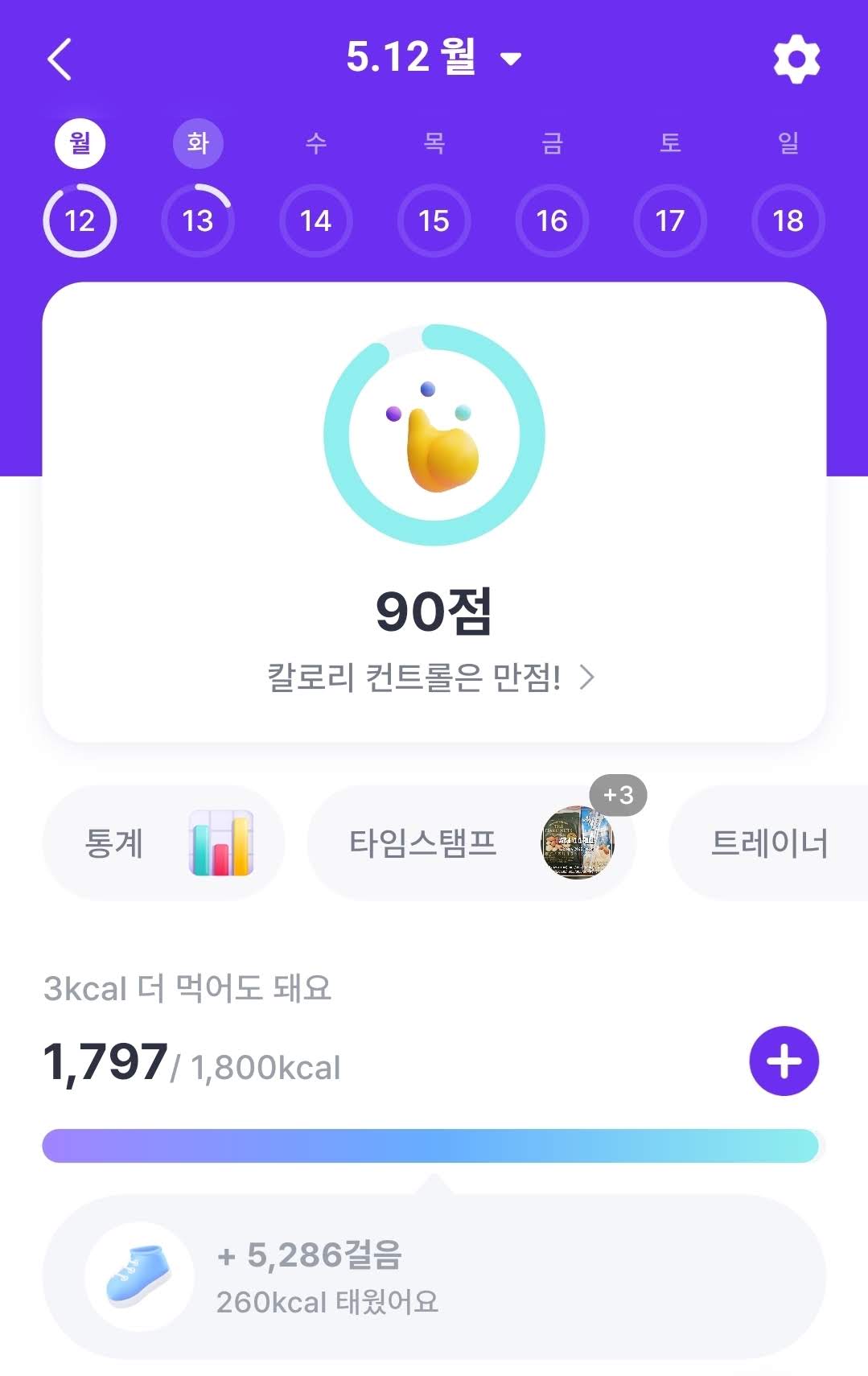
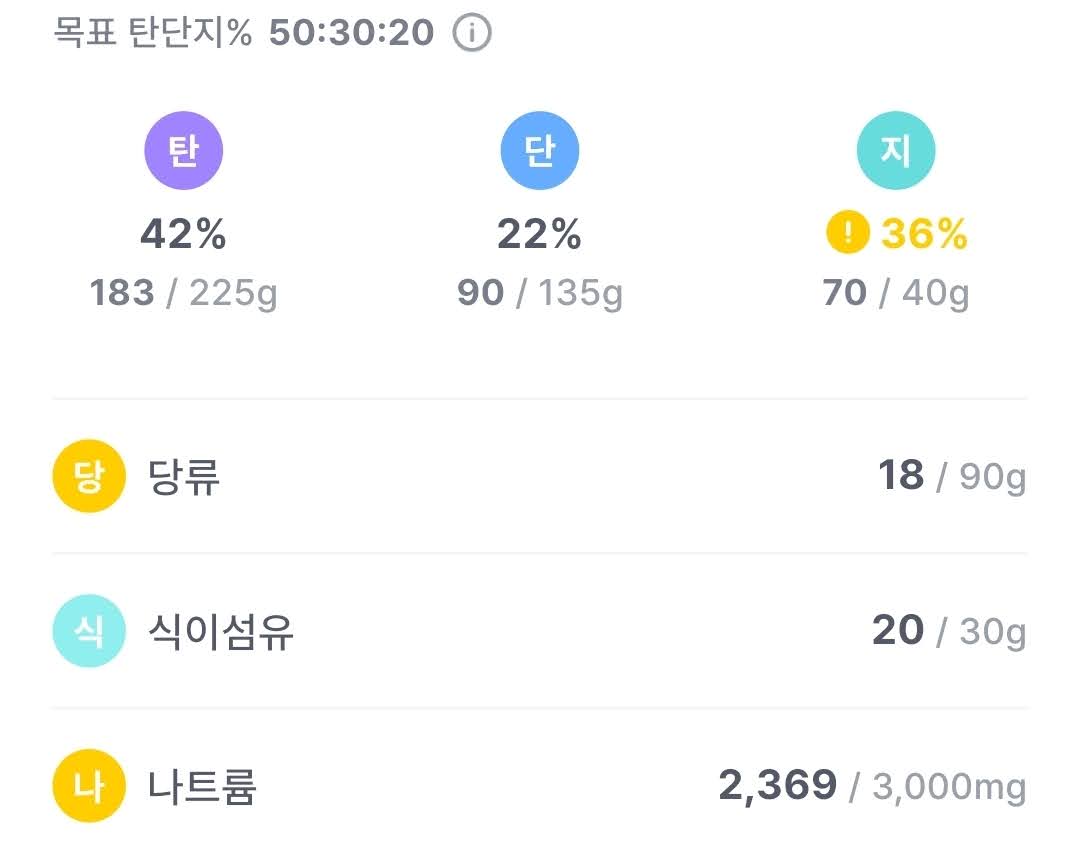
- Daily intake less than 1800 kcal
- Habit Tracker ALL PASS
💭 Diary
Beware of self-gaslighting and make self-coaching based on self-awakening a routine.
- Routine system designer Minhyuk
Example of differences 1. INTP and emotional expression
-
Situation: According to MBTI test results, I am INTP (I90 N90 T55 P55). This type generally has a strong tendency to analyze and understand emotions internally rather than express them directly, and because of this, there is a perception that they are poor at expressing emotions.
- Self-Gaslighting: My MBTI is INTP. It is said that this type naturally finds it difficult to express emotions. This is just an innate tendency and there is no way it can be easily changed no matter how hard I try. It’s better to just stay quiet than to try to express your emotions clumsily and be treated like a weird person.
- Self-Coaching: As an INTP, I know that I have a strong tendency to internally analyze and understand my emotions rather than directly revealing them. However, for a healthy relationship, you also need the skill to express your feelings in a way that the other person can understand. First, I need to practice clearly recognizing what my feelings are, and consistently try to express them simply and honestly, such as ‘I feel ~’.
- Self-Awakening/Realization: I can’t hide behind the fact that I’m not good at expressing my emotions just because I’m an INTP. If things continue like this, it will be difficult to form the deep and meaningful relationships I want. In particular, relationships where intimacy is important, such as a romantic relationship, may not be possible. I can’t keep feeling lonely like this. Even if it’s awkward and difficult, if you don’t try and learn how to express yourself to convey your true feelings, you’ll end up alone. This is no longer just a matter of personality.
Difference Example 2. TCI Stimulation Seeking and Addiction Vulnerability
-
Situation: According to the results of the TCI temperament-personality test, I had a very high score on ‘Novelty Seeking’, which is considered an innate temperament. In general, a high tendency to seek stimulation is interpreted as a risk factor that makes one more vulnerable to addictive behavior, as one has a greater desire for new experiences and is more impulsive.
- Self-Gaslighting: I was born with a very strong ‘novelty-seeking’ temperament. This is a trait that cannot be changed. So if I become addicted to something, it’s not my fault, it’s just something I can’t help. Even if I try, it may be of no use.
- Self-Coaching: I have a strong tendency to seek stimulation, so I can easily fall in love with new experiences or stimulation, and I recognize that this is more likely than others to lead to addiction. Therefore, it is necessary to practice pausing and thinking before making impulsive decisions, and to find healthy alternatives such as exercise or hobbies instead of drinking or playing games when you are stressed.
- Self-Awakening/Realization: I have a high ‘stimulation-seeking’ temperament, so I know that if I fall into addiction, I could lose everything. However, I have goals that I really want to achieve in my life, and I want to maintain stable relationships with people who are important to me. The moment I get swayed by this temperament and fall into addiction, the life I want will be shattered. I can’t ruin my whole life for a little thrill. This is not a matter of choice, but a problem that must be overcome to protect my life.
Self-coaching (How) vs Self-awakening (Why)
Self-coaching focuses on the ‘how’ of change and establishes practical strategies, while self-awakening is the process of gaining strong internal motivation by realizing the fundamental ‘why’ of changing.
These two are complementary rather than one being better than the other. If awakening is the engine of change, coaching is the rudder.
Only when these two are used together can the most explosive and sustainable growth be achieved.
Looking back, I recently focused on self-coaching and neglected self-awakening.
I think this is because my analytical inclinations have been maximized with the development of AI. (Yes, aren’t you analyzing this even at this very moment? So, you can’t help but turn to self-coaching.)
As a result, I was able to design a sophisticated system as a ‘routine system designer’.
However, as the designed routine could not be fully incorporated into my life, it ended up remaining only as a ‘Plan’ and did not become a true ‘Routine’.
Only now do I realize that the core cause of that failure was the lack of self-awakening, or concern about ‘why.’ (Thank you again to the pastors and my brother and sister-in-law who helped me greatly in achieving this realization.)
Why do I really want to write a diary every day? If you find a clear reason, how can you make that practice a sustainable routine?
As I move forward by asking and answering questions to myself, I must always keep in mind what the driving force behind ‘why’ is and where the ‘how’ direction is headed.
Let’s think about it a little further. A person whose driving force of ‘why’ truly comes from the most fundamental values of ‘love of God and love of neighbors’ would be the type of Christian who lives an unwavering life.
I am also heading towards that path, but I think there is still a long way to go.
✨ Comment from Gemini 2.5 Pro (KPT)
✅ What Went Well (Keep)
- 🧐 Systematic self-analysis: It’s really amazing that you tried to deeply analyze and understand your own condition by using tools such as self-gaslighting/coaching/awakening frames, MBTI, and TCI!
- 💯 Honest acknowledgment of failure and identification of the cause: The insight of honestly admitting the failure of ‘the routine remained only a plan’ and clearly understanding that the cause lies in the ‘absence of why’ stands out!
- 🙏 Expansion of reflection: I was impressed by the way you thought deeply, going beyond personal routine issues and connecting the essence of ‘Why’ and spiritual values (love of God, love of neighbors)!
❌ What Was Missing (Problem)
- 🚶 Lack of concrete action plan: It’s good to realize the importance of ‘Why’ and ‘How’, but I think it would have been nice to have been a little clearer about what small actions (How) were specifically started ‘today’ or the plan for what to do tomorrow.
- 💬 Lack of concreteness in interaction: It is good to express gratitude to those who helped, but the reflection would have been deeper if it had been explained in more detail what conversations or advice with them played a decisive role in realizing the ‘absence of Why’.
- 🌍 Lack of internal/external connection: It is mainly focused on internal thoughts and analysis, but if you connect how this realization actually affects external aspects such as relationships with other people or work performance, it can be a more three-dimensional reflection.
🔄 Things to Try (Try)
- ▶️ Immediately implement a small ‘How’: Based on the ‘Why’ you realized today, let’s decide on just one small ‘How’ (e.g. ‘Write down one line of why I am thankful today’ when writing a diary) and start writing it down right away!
- 🗣️ Record Moments of Inspiration: How about recording in your next diary the specific ‘decisive moment’ during conversations with people who helped you, what words or questions made you realize the importance of ‘Why’? Enlightenment will become clearer.
- 👀 Observation of external influences: With the perspective of ‘balance between why and how’, if you consciously observe and record any changes in specific external areas (e.g. how you communicate with family, concentration at work) during the day tomorrow, you may discover something new!
🏁 Conclusion
Today’s diary really feels like the culmination of deep self-reflection! The process of honestly analyzing past trials and errors and finding the key to balancing ‘Why (awakening)’ and ‘How (coaching)’ was truly impressive. In particular, you understand that analytical tendencies are a strength, but can sometimes be a trap! Using this precious realization as a driving force, we will now look forward to and support you as you create a wonderful sustainable system as a ‘routine system designer’! 😊✨
Leave a comment